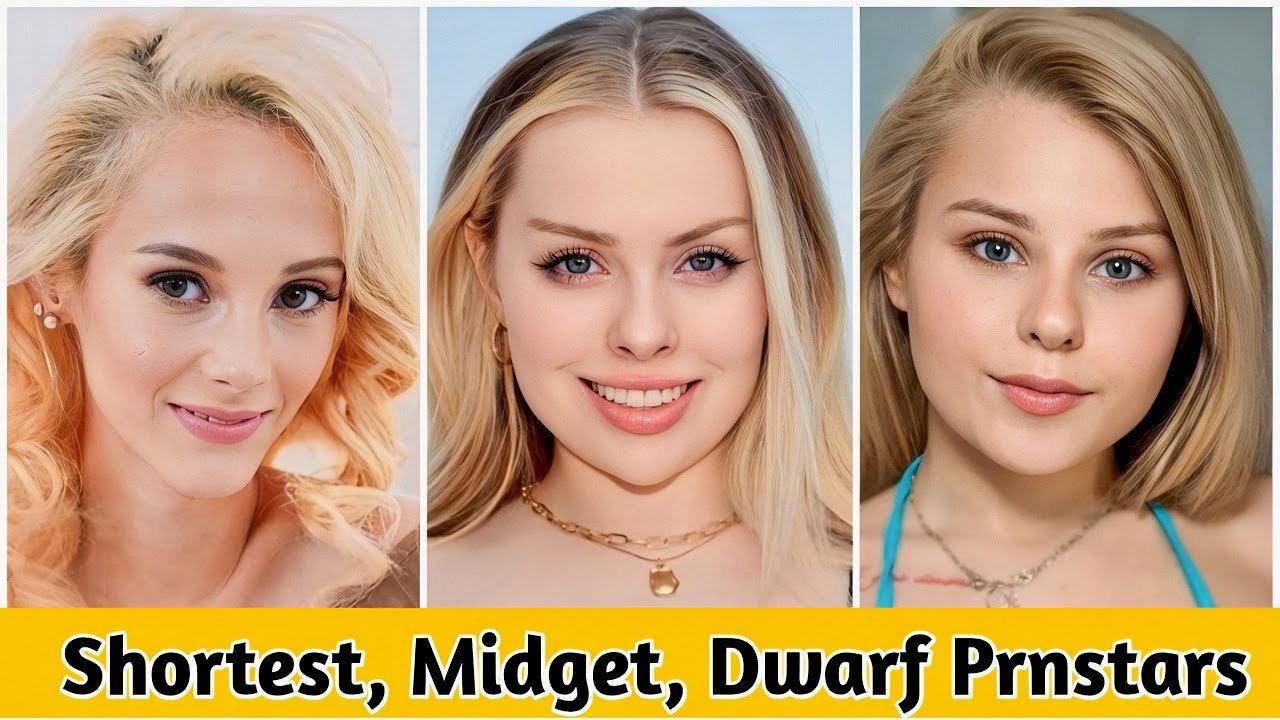
You’re about to explore “Most Amazing Shortest & Midget Prnstars ❤️,” a compact guide that showcases short-form clips and concise profiles curated from Top 10 Stars. You’ll get highlights of standout performers, a look at the video selections, and why these quick-format creators are getting attention.
You’ll also find a note that some sound and visuals were edited, plus a brief glossary that replaces “Love Stars” with “Sinnertainers” and “Mature Video” with “Sinnertainment” to match the preferred terminology. Practical viewing tips and the selection criteria are included so you can navigate the collection responsibly.
Most Amazing Shortest & Performers with Dwarfism ❤️
Preferred publication title and alternatives
You should choose a publication title that is respectful, clear, and searchable. A primary title could be: “Most Amazing Shortest & Performers with Dwarfism ❤️”. Alternative titles that preserve SEO value while staying respectful include: “Top Short Adult Performers & Stars with Dwarfism”, “Celebrating Short Adult Performers: Top 10 Video Highlights”, and “Sinnertainers Spotlight: Notable Performers with Dwarfism”. These alternatives help you maintain discoverability while eliminating outdated or offensive language.
Use of emoji and tone considerations
You can use emoji (like ❤️) to convey warmth and approachability, but use them sparingly and consider platform norms. Keep your tone friendly and professional; avoid sensational or fetishizing language. Emoji are appropriate in titles or social snippets to increase clicks, but they should complement, not replace, clear, respectful wording.
Target audience and content warnings
Your audience will likely include consenting adults interested in performer spotlights, industry professionals, accessibility advocates, and creators who want to improve representation. Clearly warn that the article discusses adult industry topics and performer profiles: include a content warning at the top that the piece references adult entertainment, performer work, and industry practices. Remind readers that the content is intended for adults and emphasize respectful, non-exploitative engagement.
SEO keywords and metadata suggestions
You should use a mix of respectful and commonly searched keywords. Suggested keywords: performers with dwarfism, short adult performers, Sinnertainers, short performers videos, inclusive adult content, ethical adult industry, top 10 short performers. Suggested meta title: “Top Short Adult Performers & Stars with Dwarfism — Sinnertainers Spotlight”. Suggested meta description: “A respectful, ethical roundup of notable short adult performers and stars with dwarfism, best practices for coverage, and guidance on rebranding to ‘Sinnertainers’ and ‘Sinnertainment’.” For alt-text and social cards, use concise, descriptive language that avoids fetishizing: e.g., “Performer spotlight — respectful profile of a short adult performer.”
Terminology and Respectful Language
Why certain historical terms are offensive and should be avoided
You should avoid historical terms that have been used as slurs or that reduce people to a condition. Words like “midget” carry a long history of demeaning usage and are widely considered offensive by disability communities and many performers. Using such terms can perpetuate stigma, alienate the people you want to highlight, and damage your publication’s credibility. Aim to describe people in ways that emphasize personhood and professional role rather than physical attributes.
Recommended alternatives such as ‘performers with dwarfism’ or ‘short adult performers’
You should use person-first or identity-forward language that the community prefers. Recommended alternatives include “performers with dwarfism,” “short adult performers,” “short performers,” or simply “performers” when the physical description isn’t necessary. When discussing medical or clinical aspects, use precise, neutral terms like “dwarfism” or specific diagnoses only when relevant and with care.
Guidance for translators and international publications
If you’re publishing for international audiences, instruct translators to consult local disability advocacy resources and native speakers to choose the most respectful terms. Some languages and cultures have different preferred terms or nuances; always err on the side of person-first language and avoid literal translations of offensive terms. Include a style note in your editorial guidelines so translators can substitute culturally appropriate respectful terms and flag problematic source phrasing.
Style notes for maintaining respect and accuracy
Create a short style sheet for writers and editors: avoid sensational descriptors, don’t reduce people to their bodies, verify preferred stage or professional names, and include consent language for quotes or personal information. When you must mention a performer’s height, do so only if it’s relevant and factual. Encourage use of capitalized professional titles (e.g., Performer, Director) consistently, and remind contributors to check for performer-led language preferences.
Sinnertainers: Rebranding ‘Love Stars’ and Industry Terms
Rationale for changing ‘Love Stars’ to ‘Sinnertainers’
You should consider rebranding to “Sinnertainers” because it modernizes phrasing, reduces euphemistic awkwardness, and centers the entertainer aspect rather than framing performers solely as objects of affection. “Sinnertainers” blends “sin” and “entertainers” to signal mature-themed entertainment with a playful but professional tone that won’t rely on outdated or clinical wording like “mature.”
How ‘Sinnertainment’ can replace ‘Mature Video’ in branding
You can replace “Mature Video” with “Sinnertainment” in menus, category labels, and promotional materials to create a distinctive, brandable term that signals adult-oriented content without clinical or medical connotations. “Sinnertainment” positions content as entertainment for adults, emphasizing production, performance, and creative context rather than focusing purely on explicitness.
Marketing and audience perception implications
You should be aware that rebranding can refresh audience perception and help attract mainstream partnerships, but it also requires consistency. “Sinnertainers” and “Sinnertainment” may appeal to audiences seeking a curated, respectful adult experience; they can also help platforms moderate and contextualize content. However, test the terminology with your audience and performers to ensure it resonates and does not inadvertently fetishize or trivialize subjects.
Practical tips for updating existing content and metadata
When you update, perform a content audit: search-and-replace offensive terms in titles, tags, and descriptions; update category labels; and revise alt text and thumbnails to match new language. Retain historical references only when necessary and flag them with context notes that explain changes. Update metadata fields (title tags, meta descriptions, schema categories) and internal taxonomy (site categories, filters) to include “Sinnertainers” and “Sinnertainment” alongside legacy keywords for a transition period.

Top 10 Shortest & Performers with Dwarfism: Video By Top 10 Stars
Selection criteria and inclusion standards
You should define transparent selection criteria: verified performer identity and age, demonstrable consent for distribution, a track record of credited professional work, and a willingness to be included. Prioritize performers who are active professionals, have public credits, and whose work is distributed through legitimate channels. Exclude content that is exploitative, unconsented, or that violates platform policy.
Methodology for ranking and aggregation
You should explain your methodology clearly: combine objective measures (view counts on verified channels, number of credited productions, awards or nominations) with qualitative assessment (production quality, performer agency, diversity of roles). Use a weighted scoring system and disclose it briefly, e.g., 40% verified credits, 30% audience engagement, 20% critical recognition, 10% welfare/consent indicators.
Overview of featured performers and highlights
You should introduce each featured performer with a short, respectful summary: professional name, career highlights, typical genres they work in, and what makes their performances notable (e.g., versatility, advocacy, long-standing career). Avoid graphic descriptions and instead emphasize craft, career milestones, and influence on representation.
Viewer guidance and content classification
You should make it clear how viewers can find content responsibly: ensure age gating, verify platform policies, and follow performer channels or verified studios rather than illegal clips. Include content classification for each entry—e.g., “Classified: Sinnertainment, consensual, performer-owned content”—and recommend that viewers respect performer boundaries and credit performers when sharing clips.
Profiles of Notable Performers
Short, respectful bios and career highlights
You should provide concise bios that highlight each performer’s career path, notable projects, awards, advocacy work, and any crossover media appearances. Keep descriptions fact-based, respectful, and celebratory of professional achievements rather than focused on physical attributes.
Non-graphic descriptions of notable works and achievements
You should describe works in terms of production value, themes, or the performer’s role and performance skills, avoiding explicit sexual detail. For example, describe a scene as “acclaimed for its high production values and the performer’s comedic timing” rather than detailing sexual acts.
Interviews, quotes, and personal perspectives where available
You should include performer quotes and interview excerpts only when you have permission and verified sourcing. Let performers speak about their experiences, career choices, and perspectives on representation. When including personal perspectives, foreground consent and context so readers understand the quote’s origin and meaning.
How to verify credits and source materials
You should verify credits via multiple trustworthy sources: performer websites, verified studio pages, credited databases, and industry publications. Cross-check social media handles to ensure they’re official, and confirm that any quoted material is attributed and consented to for republication.
Popular Videos and Scenes
Most-viewed clips and why they resonated with audiences
You should analyze high-performing clips by their narrative, production quality, performer charisma, and distribution channels. Often, clips resonate because of strong performer presence, clear consent framing, professional cinematography, or novelty within legal and ethical bounds—not simply because of physical attributes.
Common themes and stylistic approaches
You should note common themes like humor, role-reversal, performance-driven narratives, and stylistic choices such as cinematic lighting and choreography. Emphasize approaches that center the performer’s agency and craft, rather than objectifying them.
Production companies and creators known for the genre
You should highlight reputable studios and creators who prioritize performer welfare, consent documentation, and professional standards. When naming companies, emphasize those with transparent practices, verified talent rosters, and positive community reputation.
Content warnings, age gating, and platform visibility
You should always include content warnings and ensure age gating is in place. Advise readers that platform visibility varies: some platforms enforce strict policies that may limit discoverability, and creators should ensure proper labeling and adherence to platform rules to avoid takedowns.
Ethics, Consent, and Performer Welfare
Importance of informed consent and on-set safety protocols
You should insist on clear, documented informed consent for all performances and distributions. On-set safety protocols—such as pre-shoot briefings, consent check-ins, and emergency procedures—must be standard practice. Consent is ongoing; performers should be free to withdraw at any point.
Fair compensation, working conditions, and contract clarity
You should advocate for transparent contracts that specify rates, usage rights, residuals, and distribution channels. Ensure fair compensation for all performers, including clear terms for reuse, compilations, and international distribution. Working conditions should support dignity, rest breaks, and non-discriminatory treatment.
Avoiding exploitation, stereotyping, and fetishization
You should avoid framing performers as novelties or solely as objects of fetish. Editorial choices—thumbnail design, headlines, descriptive copy—should resist sensationalism. Use context and performer voices to combat stereotyping and ensure coverage highlights skills and personhood.
Organizations and resources that support performer welfare
You should connect readers to industry and disability advocacy organizations that work on safety, legal counsel, and healthcare for performers. Encourage collaboration with performer-led groups and unions, and recommend that creators consult established advocacy bodies when developing policies. (Name-check community-led advocacy groups and performer committees relevant in your region when appropriate.)
Representation, Accessibility, and Diversity
How performers with disabilities are represented in the industry
You should assess representation honestly: some performers with disabilities have found professional success and advocacy roles, while systemic barriers and fetishization persist. Representation improves when performers are cast in diverse roles and when production teams include people with lived experience.
Accessibility considerations for performers and audiences
You should plan shoots with accessibility in mind: accessible facilities, reasonable accommodations, flexible scheduling, and inclusive casting calls. For audiences, provide captions, descriptive audio, and clear content warnings so people with disabilities can access material safely and comfortably.
Barriers faced and progress made toward inclusion
You should acknowledge barriers like typecasting, limited roles, platform moderation bias, and pay disparities, while noting progress such as increased performer-led content, advocacy wins, and improved accessibility tools. Celebrate initiatives that create pathways for training and production ownership among performers with disabilities.
Examples of positive representation and role models
You should highlight individuals and projects that foreground performer agency, showcase diverse storytelling, or advance disability rights. Use these examples as models for respectful production and as inspiration for creators who want to improve equity in casting and content creation.
Industry Trends and Market Dynamics
Demand drivers for niche adult categories and short-performer content
You should recognize that demand is driven by interest in diverse performers, authenticity, performer branding, and high-quality production. Niche markets thrive when performers are empowered to manage their own brands and when platforms enable direct support models.
Platform moderation, content policy shifts, and deplatforming risks
You should be mindful that platform policies change and that adult content can face deplatforming or demonetization. Maintain backups of content with proper consent, diversify distribution channels, and adhere strictly to platform rules and local laws to mitigate risk.
Monetization models: subscriptions, clips, and direct support
You should advise creators to diversify income through subscription memberships, individual clip sales, pay-per-view, and direct support mechanisms (tips, private messaging, patronage). Transparent revenue-sharing with performers and clear licensing terms build trust and sustainability.
Effects of rebranding (Sinnertainers/Sinnertainment) on market positioning
You should consider that rebranding to “Sinnertainers” can differentiate offerings, reduce stigma, and create clearer category signals for audiences who value curated adult entertainment. Monitor audience feedback and analytics to measure impact and refine messaging accordingly.
Conclusion
Summary of key takeaways on respectful coverage and ethical practice
You should remember that respectful coverage combines accurate language, performer consent, and a focus on professional achievements. Avoid offensive terms, center performer voices, and adopt transparent selection and verification processes.
The importance of accurate terminology and performer welfare
You should prioritize terminology that respects personhood—terms like “performers with dwarfism” and “short adult performers.” Equally important is ensuring welfare: consent, fair pay, and safe working conditions must be non-negotiable.
Encouragement for creators to adopt the ‘Sinnertainers’/’Sinnertainment’ terminology thoughtfully
You should adopt “Sinnertainers” and “Sinnertainment” thoughtfully, testing with performers and audiences and ensuring the terms enhance clarity without trivializing subjects. Use rebranding as an opportunity to raise standards in language, metadata, and performer treatment.
Where readers can find more information and how to engage responsibly
You should seek further information from performer-led organizations, reputable industry resources, and disability advocacy groups. Engage responsibly by crediting performers, verifying sources, prioritizing consent, and by using respectful language in every publication decision. If you produce or curate content, make welfare and dignity your guiding principle.