
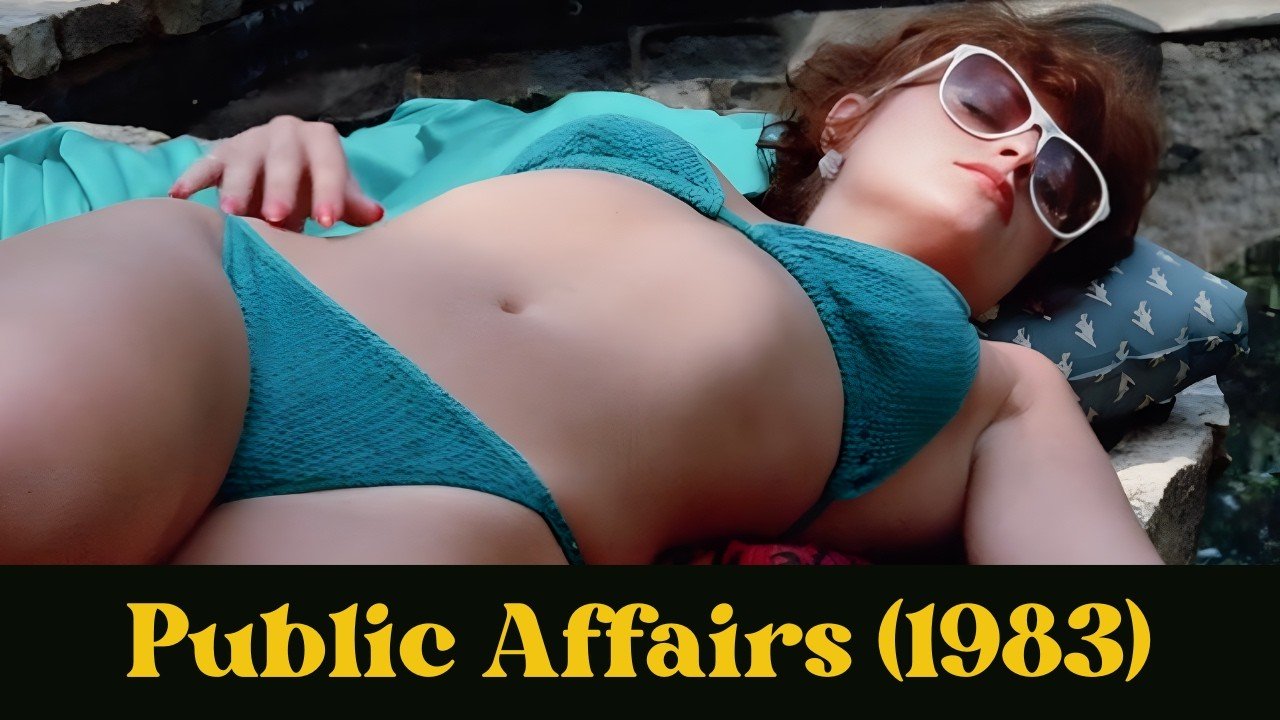
In the vibrant landscape of 1983 cinema, “Public Affairs” emerged as a bold political satire that defied conventions and satire alike. Crafted by director Henri Pachard and writer-producer Joyce Snyder, this film combined humor with raw honesty, exposing society’s obsession with moral superiority while revealing the hypocrisy that lay beneath. With an impressive cast and authentic New York settings, it left an indelible mark on the adult film industry, showcasing the ability to tackle serious themes through entertainment.
This article explores the unique attributes of “Public Affairs,” highlighting its cultural relevance and the groundbreaking efforts that shaped its production. You’ll discover how this film not only entertained but also provoked thought and reflection on political and societal issues that resonate even today. Prepare to uncover the layers behind this politically charged classic, showcasing a time when cinema dared to push beyond limits while addressing uncomfortable truths.
Overview of Public Affairs
Synopsis of the Film
“Public Affairs” is a groundbreaking political satire that deftly navigates the murky waters of sex, politics, and hypocrisy. Set against the backdrop of an election campaign, you follow the lives of a diverse cast of characters who become entangled in a web of lust, deception, and moral ambiguity. The film cleverly juxtaposes the fervor of political aspirations with explicit adult scenes, presenting a world where every political maneuver comes with a hidden agenda. You are invited to witness the absurdity of not just the characters’ pursuits but the societal norms that govern them, all while exposing the ridiculous lengths to which individuals will go to maintain their public personas.
Context of Release in 1983
When “Public Affairs” hit theaters in 1983, America was experiencing a cultural zeitgeist marked by political disillusionment and an evolving sexual landscape. The conservative wave of the Reagan era coupled with ongoing debates about morality set a ripe stage for this controversial film. You can imagine how audiences, still reeling from the Watergate scandal and the Vietnam War, found themselves at the crossroads of a society grappling with its own moral compass. “Public Affairs,” with its audacious themes, served as a stark commentary on these turbulent times and encouraged viewers to reflect on the disconnect between public ideals and private realities.
Themes and Motifs
At its core, “Public Affairs” strategically dives into themes of hypocrisy and moral purity, scrutinizing how society often elevates appearances over truth. You’ll find motifs of duality evident in every character, where their public personas clash dramatically with their private desires. It’s a film that thrives on irony, forcing you to question who the true “villains” are in a society where everyone seems to wear a mask. The laughter it instigates often carries an undercurrent of discomfort, illuminating just how deeply rooted hypocrisy runs in the tapestry of American life.
Director and Production Team
Henri Pachard’s Vision
Director Henri Pachard approached “Public Affairs” with an unmistakable vision: to challenge societal norms while crafting a narrative that was as entertaining as it was thought-provoking. You can see how his background in adult films blended with an ambition to elevate the genre, pushing it beyond simple titillation into the realm of political critique. Pachard’s careful attention to both story and aesthetic helps to create a film that neither glorifies nor vilifies its subject matter but rather invites you to engage with it critically.
Joyce Snyder’s Role in Development
As the writer-producer, Joyce Snyder played an instrumental role in the film’s creation. Her perspective as a woman in a predominantly male industry brought a unique voice to the narrative. You will appreciate her efforts in ensuring that female characters were not merely side notes in a male-dominated storyline but were integral to advancing the film’s themes. Snyder’s approach allowed the film to explore the complexities of female sexuality in a political context, challenging conventional portrayals.
Production Challenges and Innovations
Creating “Public Affairs” was no small feat. The production team faced challenges typical for the genre, including limited budgets and societal backlash. However, these constraints sparked innovative solutions, such as using real New York City locations to ground the film’s story in a tangible reality. You can see how this choice not only added authenticity but also enriched the viewing experience, creating a vibrant backdrop for the unfolding drama.
Cultural Context in the 1980s
Political Climate of the Era
The political atmosphere of the 1980s was charged, underpinned by the desires and frustrations of a nation divided. Reagan’s administration popularized a return to traditional values, often clashing with the progressive movements of the time. You might remember how “Public Affairs” emerged as a response to this political climate, offering a lens through which to examine—and joke about—the era’s contradictions.
Social Attitudes Towards Sex and Politics
During this decade, social attitudes towards sex were undergoing a transformation. The sexual revolution of the 1960s had brought forth greater freedoms, yet the 1980s highlighted an inherent tension between erotic liberation and conservative moralism. You’ll notice that “Public Affairs” taps into this delicate balance, using humor and satire to critique both the newfound openness and the ongoing censorship that characterized the period.
Comparison with Contemporary Films
When comparing “Public Affairs” with contemporary films, one can see how it stands out for its boldness. While many films skirted around the edges of political discourse, “Public Affairs” ran headfirst into the fray, mixing explicit content with sharp social commentary. You’ll find that while today’s cinema often addresses political themes, few manage to combine explicit adult content so adeptly with socially relevant narratives, making this film a unique artifact of its time.
Casting and Performances
Profiles of Key Actors
The cast of “Public Affairs” reads like a who’s who of adult film legends. Actors such as Paul Thomas and Annette Haven brought star power to the production, each lending their unique charisma to their roles. You might find it interesting how Kelly Nichols and Robert Kerman used their performances to balance both eroticism and sincerity, elevating the film beyond mere adult entertainment to something more profound.
Casting Process and Selection
The casting for “Public Affairs” was carefully considered to ensure each actor contributed meaningfully to the storyline. You could say that combining seasoned performers with a fresh talent pool resulted in a dynamic ensemble that could not only deliver lines effectively but also embody the film’s thematic essence. The casting choices reinforced the film’s satire, as each actor’s public image often mirrored the duality their characters faced.
Impact of Performances on the Film’s Reception
The performances in “Public Affairs” were pivotal in shaping audience reactions. The blend of humor and vulnerability showcased by the cast created a disarming effect, inviting you to laugh while simultaneously reevaluating the hypocrisy on display. Critics and audiences alike praised how the actors effectively embodied the complexities of their characters, ultimately enhancing the film’s satirical edge.
Cinematography and Technical Aspects
Use of 35mm Film and Real Locations
Taking full advantage of the technological capabilities of the time, “Public Affairs” was shot on 35mm film, lending it a polished aesthetic that many adult films hadn’t achieved. Filming on location in bustling New York City allowed the film to immerse you in a vibrant, realistic environment that juxtaposed the explicit content with the energy of urban life.
Visual Style and Directorial Choices
The visual style of “Public Affairs” is striking, characterized by a blend of dynamic camera work and careful framing. Pachard’s keen eye for detail ensures that nothing feels gratuitous; instead, the visuals serve the narrative. You might particularly enjoy how the playful use of color and lighting amplifies the comedic elements, making even the most outrageous scenes feel grounded in reality.
Editing Techniques and Their Effects
Editing played a crucial role in shaping the film’s pacing and overall mood. With snappy cuts that maintain momentum while allowing you time to absorb comedic elements, the editing choices keep you engaged without losing the narrative thread. You can appreciate how these techniques enhance the satirical nature of the film, making the juxtaposition of its explicit and political themes all the more impactful.
Themes of Hypocrisy and Moral Purity
Satirical Elements in Plot
“Public Affairs” thrives on satire, with a plot that spins a web of absurdity around the characters’ desperate attempts to project moral superiority in an immoral world. You’ll find a richness in how these comedic elements critique the very fabric of societal expectations, revealing the absurdity of self-righteousness. It’s a clever dance between comedy and critique that holds a mirror to real-life politics.
Character Analysis and Development
As you journey through the film, each character embodies different perspectives on morality and power. For instance, the politician in search of votes often displays an uncanny resemblance to societal leaders we see today—simultaneously charismatic and profoundly flawed. You can take note of how these character arcs unveil deeper truths about the conflict between personal desires and public responsibilities, crafting a narrative that resonates across generations.
Public Reception and Controversy
Upon release, “Public Affairs” sparked discussions and controversies about its overtly political content intertwined with explicit scenes. While some hailed it as a groundbreaking commentary, others dismissed it as merely provocative. You might find it fascinating how public reactions mirrored the film’s themes, revealing the hypocrisy of those who decry explicit art while indulging in the intrigue of its narrative.
Impact on the Adult Film Industry
Breakthroughs in Content and Genre
“Public Affairs” pushed the boundaries of what adult films could convey—transforming the genre from mere entertainment into a medium capable of serious commentary. You’ll see how this film opened doors for future filmmakers, encouraging them to explore deeper themes rather than relying solely on sexual content for appeal.
Influence on Future Political Satire
The success of “Public Affairs” set a precedent for future films looking to tackle political satire within an adult context. By intertwining explicit content with sharp commentary, it paved the way for filmmakers to explore similar narratives, unafraid to critique societal norms. You can appreciate the ripple effect this film had, influencing how modern cinema approaches the intersection of sex and politics.
Critiques and Discussions Among Filmmakers
“Public Affairs” ignited a dialogue among filmmakers about the boundaries of creativity in the adult film sector. You might find it interesting how its unique stance prompted discussions on ethical considerations, art versus exploitation, and the challenges of representing politics in erotic narratives. This film encouraged a re-examination of the adult genre, challenging norms while opening new avenues for artistic expression.
Reception and Critique
Initial Audience Reactions
Upon its release, audience reactions were mixed. While some viewers relished its audacity, others were shocked by its daring approach. You can sense how the film’s boldness provoked debate and curiosity, drawing people in despite—or perhaps because of—the controversy surrounding it.
Critical Reviews and Commentary
Critics offered a spectrum of reviews, with some praising its innovative storytelling and humor while others derided its explicit nature. You’ll notice how this polarizing reception illustrates the film’s ambitious nature, as it ventured into territory often avoided by its contemporaries. The conversation it sparked ultimately enriched the discourse on adult cinema.
Legacy and Retrospective Reviews
Even decades later, “Public Affairs” is regularly referenced in discussions about the evolution of adult films and political satire. You can see how retrospective reviews often emphasize its pioneering role in challenging societal norms, reshaping not only the adult film industry but also influencing broader cultural conversations. Its legacy continues to resonate, reminding us of the complexity found at the intersection of politics and desire.
Narrative Structure and Storytelling
Plot Development and Pacing
“Public Affairs” masterfully balances an intricate plot with well-timed pacing, inviting you into a world where every twist seems fittingly outrageous. The progression flows naturally, making it easy to become lost in the unfolding drama that intertwines personal conflicts with political machinations.
Character Arcs and Relationships
As you delve into the character arcs, you’ll discover intricate relationships that enhance the film’s depth. Authentic emotional ties and betrayals create a web that reflects the complexities of the societal roles each character embodies. You’ll see clearly how these arcs serve to amplify the film’s satirical message, ultimately culminating in a resolution that considers the farcical nature of hypocrisy.
Climactic Moments and Resolutions
The climactic moments in “Public Affairs” hit hard, challenging both the characters and the audience to confront uncomfortable truths. As resolutions unfold, you might appreciate how they blend comedic denouements with sobering reflections on reality, reinforcing the movie’s status as a thought-provoking experience.
Conclusion
Summary of Key Points
In summary, “Public Affairs” stands as a remarkable intersection of political commentary and adult cinema. Through its dynamic cast, innovative direction, and sharp satire, it pushes boundaries while inviting viewers to reflect on the societal hypocrisies of the time. You’ve explored how its themes remained relevant, echoing the enduring challenges faced in both politics and personal relationships.
Reflection on Cultural Legacy
The cultural legacy of “Public Affairs” is rich and multifaceted. It invites you to consider how art influences perceptions of morality, politics, and sexuality, serving both as entertainment and a critique of societal norms. Its daring nature cultivated a space for future filmmakers to take risks while remaining relevant in a rapidly evolving cultural landscape.
The Ongoing Relevance of Public Affairs
As you reflect on “Public Affairs,” its ongoing relevance becomes apparent. The themes of hypocrisy, moral purity, and the absurdities of political life continue to resonate, making it a timeless piece of cinema that encourages you to ponder the complexities of human behavior. Through this film, you are reminded that the interplay between sex and politics is both an age-old dilemma and a contemporary concern, leaving you with ample material for thought long after the credits have rolled.