
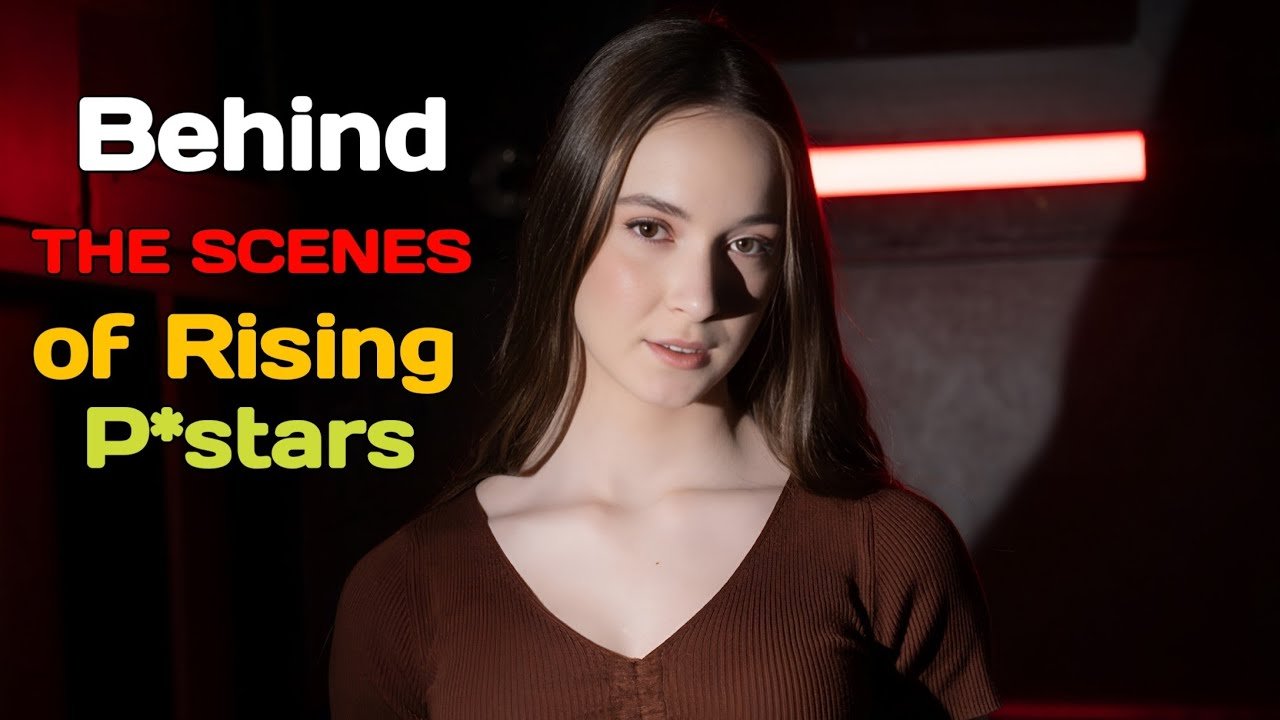
In “Most Gorgeous Behind the Scenes with Top Rising P*stars in 2025”, you’re invited to explore the personal journeys of rising Sinnertainers and the evolving scene of Sinnertainment. You’ll see how talents like Hazel Moore blend charisma and craft while shaping their public personas.
The article outlines behind-the-scenes moments, career transformations, and the trends influencing the industry this year. You can expect concise profiles, archival clips, and commentary that tracks each performer’s rise and impact.

Profiles of Top Rising P*stars in 2025
You’re looking at a snapshot of a rapidly evolving creative sector in 2025, where rising performers blend professionalism, branding savvy, and production literacy to grow their careers. This profile section gives you a sense of who these performers are, how they’re being discovered, and why their behind-the-scenes presence matters as much as their on-camera work.
Selection criteria and data sources used to identify rising talent
When you identify rising talent, you rely on a mix of quantitative and qualitative signals: growth in subscription numbers, trending engagement rates, frequency and quality of collaborations, portfolio diversity, and visibility across mainstream and niche platforms. You typically source data from platform analytics, third-party aggregator reports, creator networks, social media growth trackers, and industry trade coverage. You also weigh peer and audience recommendations, guest appearances, and festival or award mentions to get a fuller picture.
Demographics, diversity and geographical representation
You’ll notice the cohort of rising performers in 2025 is more diverse than in past cycles: they come from varied ethnic, cultural and regional backgrounds and bring different body types, gender identities and performance styles. Geographic representation has broadened thanks to remote collaboration tools and global distribution platforms, so you’ll find talent emerging from metropolitan hubs as well as smaller cities and multiple countries. This diversity helps you and audiences see a wider range of stories and aesthetics.
Common career paths and background stories
Many rising performers follow non-linear paths: some transition from mainstream acting, dance, modeling, or music; others start as content creators or stylists and build on-camera careers through collaboration. You’ll meet people who studied performing arts, while others learned technical skills such as video production or social media marketing and applied those to grow their presence. Common elements include early self-produced content, strategic collaborations, and steady investment in branding and production quality.
Metrics that define ‘rising’ — engagement, subscriptions, collaborations
To decide who’s “rising,” you focus on momentum rather than absolute size. Key metrics include month-over-month subscriber growth, engagement rates (likes, comments, saves), retention on long-form pieces, number and quality of collaborations, cross-platform reach, and paid opportunities like sponsored content. You also track industry recognition — invitations to panels, collaborative tours, or partnerships — as an indicator of increasing professional standing.
Spotlight on Hazel Moore and Contemporary Figures
You’ll want a concise, fair look at prominent names, and Hazel Moore stands out as a contemporary figure who combines presence with professional development. This section gives you a brief but broad portrait of Hazel and others who are shaping the scene.
Concise professional bio and public milestones for Hazel Moore
Hazel Moore is a public figure celebrated for her charisma and consistent output; she’s often described as having an approachable persona and strong on-camera presence. Standing around 5.7 feet tall, Hazel’s milestones include steady audience growth, collaborations with photographers and directors, and appearances across content platforms and media interviews. You’ll see her cited for both creative versatility and reliable professionalism.
Signature persona, style and on-screen strengths
Hazel’s signature persona blends warmth, confidence and a polished aesthetic that resonates with a broad audience. On-screen, you’ll notice her strength in timing, emotive expression and an ability to create a sense of intimacy while maintaining boundaries. Her style tends to favor clean lines, thoughtfully chosen wardrobe, and a consistent color and lighting palette that supports her brand.
Major career highlights and notable projects to date
Hazel’s career highlights include a series of well-received collaborations with established photographers, branded shoots, and several high-visibility features on curated platforms and channels. You’ll also find that she’s diversified into creative roles behind the camera — helping with concept development and occasionally executive-producing projects — which signals a long-term career approach rather than short-term visibility.
Public image management, interviews and audience reception
If you follow Hazel’s public communications, you’ll notice careful image management: a consistent narrative, selective interviews, and a focus on professional accomplishments and creative goals. Audience reception tends to be positive, with fans appreciating authenticity and clear boundaries. Hazel and contemporaries often work with PR consultants or managers to shape messaging while maintaining direct engagement with followers.
Behind-the-Scenes Production Workflow
You want to understand how professional shoots are organized — from idea to finished product. A tight workflow ensures safety, clarity and high production values, and this section takes you through standard industry practices.
Pre-production planning: concept, scripting and permissions
In pre-production you’ll develop concept boards, storylines or shot lists, and scripts when relevant. Permissions and clearances are part of this phase: location releases, talent agreements, music licensing, and model/property releases must be secured. You’ll also plan logistics like set layout, equipment needs and contingency plans, and confirm that all participants have access to the production schedule and safety protocols.
Call sheets, scheduling and coordination between departments
You use call sheets to communicate daily schedules, locations, contact details and scene priorities. Effective scheduling coordinates talent availability, wardrobe, makeup and technical teams so setup and turnover run smoothly. Clear communication channels — group messaging, shared schedules, and a stage manager or production coordinator — help you avoid conflicts and keep everyone informed of updates or delays.
On-set roles: producers, directors, camera crew and production assistants
On set, roles are defined so you know who’s accountable for which outcomes: producers oversee logistics and budgets, directors focus on creative decisions and performance direction, camera operators and DPs handle framing and technical image capture, and production assistants support errands, continuity and crowd control. When you understand each role, you can better collaborate and escalate issues quickly.
Post-production: editing, color grading, sound and final delivery
Post-production is where the product takes shape: you’ll edit for pacing and narrative, perform color grading to unify the visual tone, and mix audio for clarity and fidelity. You’ll also manage revisions requested by talent or producers, ensure final assets meet platform specifications, and produce deliverables — multiple aspect ratios, captions, and metadata — for distribution and archival.
Wardrobe, Styling and Beauty Routines
You know wardrobe and styling are integral to a shoot’s visual language and to the performer’s brand. This section covers practical approaches that keep continuity and performer comfort at the forefront.
Costume selection process and continuity management
In costume selection you’ll balance aesthetics, comfort and narrative fit. Costume designers or stylists prepare options and a continuity log that notes outfit details, accessories, and scene pairings so looks remain consistent across shots. You’ll use labeled garment bags, photos for reference, and a continuity supervisor to ensure seamless visual flow between takes and camera angles.
Hair, makeup and quick-change protocols for multi-scene shoots
For multi-scene shoots you’ll plan hair and makeup to support efficient quick-changes: alternate wigs or styling pieces, pre-set makeup stations, and assistants who can execute rapid transitions while maintaining continuity. You’ll also schedule buffer time for touch-ups and use durable, camera-ready products that hold up under lights and movement.
Skincare, fitness and grooming routines favored by performers
Many performers adopt consistent skincare and grooming regimens to keep their skin camera-ready, favoring hydration, sun protection and professional facials as needed. Fitness and movement routines are tailored for stamina and posture rather than extreme transformation. You’ll see balanced approaches that emphasize health, restful routines and professional support from trainers and dermatologists when desired.
Collaborations with stylists and independent designers
You’ll find performers frequently collaborating with stylists and independent designers to craft a distinct visual identity. These partnerships can produce signature looks, limited-run pieces for publicity, and ethical sourcing choices that resonate with audiences. When you work with independent creatives, you also support sustainable practices and fresh aesthetics.
Lighting, Camera and Cinematography
Your choices in lighting and camera craft strongly shape how audiences perceive a performance. This section outlines common technical approaches that favor flattering, story-supporting visuals.
Common lighting setups used to create flattering behind-the-scenes footage
You’ll often use soft, diffused key lights to create flattering skin tones and minimize harsh shadows, combined with fill lights to balance contrast and hair/back lights to add depth. Practicals and ambient lighting can enhance authenticity, while reflectors and softboxes keep light even. For intimate-feeling content, warm color temperatures and soft falloff often work best.
Camera choices, lenses and framing techniques for intimate scenes
Camera choices often favor mirrorless or cinema cameras with high dynamic range; lenses in the 35mm–85mm range are common for natural perspective and flattering compression. Framing emphasizes connection: medium close-ups, over-the-shoulder angles and controlled negative space. You’ll use shallow depth of field selectively to focus attention on the performer while maintaining visual context.
Movement and stabilization: gimbals, dollies and handheld approaches
Movement choices help you convey energy or intimacy. Gimbals and stabilizers produce smooth, cinematic motion for tracking shots, while dollies and sliders enable precise, slow moves. Handheld approaches can feel more immediate and organic, but you’ll balance handheld energy with stabilization tools and careful choreography to avoid dizziness or distracting motion.
Color grading and visual language decisions that define a shoot’s look
In color grading you set the emotional tone: cooler palettes feel clinical or modern, warm palettes feel inviting and sensual, and muted desaturation can convey classic or editorial moods. You’ll develop a visual language that complements wardrobe, set design and the performer’s brand so the final look is cohesive across promotional assets and long-form pieces.
Direction, Performance Coaching and Choreography
You want authentic performances without crossing ethical lines. Direction and coaching focus on craft, trust-building, and clear communication to help performers deliver their best work.
Approaches to rehearsal, blocking and timing without explicit content
You’ll run rehearsals that emphasize blocking, eye-lines and timing while keeping direction non-explicit and professional. Techniques include table reads, walk-throughs, and running scenes at reduced intensity to build rhythm. Clear cues and countdowns help performers coordinate movements, and rehearsals serve as an opportunity to identify hazards and refine camera placement.
Non-graphic coaching techniques that support authentic performances
Non-graphic coaching focuses on emotional beats, subtext, and physical cues — posture, breathing, gaze, and tempo — rather than explicit detail. You’ll use analogies, imagery, and objective-based direction (what the character wants in a moment) so performers can inhabit roles responsibly and naturally without explicit instructions.
Working with co-stars to build chemistry and trust on set
To build chemistry you’ll encourage warm-up exercises, neutral conversations before shooting, and short improvisational practices that help co-stars establish comfort. Clear consent boundaries, communicated and documented beforehand, let collaborators understand limits. You’ll foster an environment where everyone can pause, reframe, or request changes without concern.
Choreography, staging and safety considerations for complex shots
Choreography for complex shots is planned carefully: you’ll block movements step-by-step, mark safe zones, and rehearse with safety personnel present. When stunts or close contact are involved, you’ll consider simulants, choreography doubles, or camera angles that imply action without requiring risky physical execution. Safety briefings and run-throughs minimize injury risk.
On-set Health, Safety and Consent Protocols
You want shoots to be safe, respectful and legally compliant. Robust protocols protect talent and crew while enabling creative work to proceed.
Consent processes: pre-shoot conversations, documented boundaries and check-ins
You’ll conduct pre-shoot consent conversations that outline expectations, limits, and required gestures or phrases for pausing. Documented agreements detail what is and isn’t permitted, and you’ll schedule regular check-ins during production to confirm ongoing comfort. Having a trained consent officer or designated well-being rep on set improves clarity and trust.
Regular STI testing, health documentation and privacy safeguards
Regular STI testing and health documentation are standard in professional environments; you’ll require up-to-date test results and maintain confidential records in secure systems. You’ll also ensure that health information is only accessible to authorized personnel and that performers’ privacy preferences are respected in all communications and metadata.
On-set safety measures, emergency response plans and first aid
You’ll maintain on-set safety measures like clear ingress/egress, fire safety equipment, secure rigging, and hazard briefings. Emergency response plans should include local emergency contacts, on-call medical support or first aid personnel, and protocols for rapid evacuation. You’ll document these measures and make them accessible to everyone working on set.
Mental health support, aftercare and access to counseling services
You’ll prioritize mental health through access to counselors, peer support, and aftercare resources following emotionally intense shoots. Performers may appreciate structured decompression time, referrals to therapists familiar with the industry, and follow-up check-ins to ensure long-term well-being.
Legal, Ethical and Industry Standards
You need to navigate complex legal and ethical terrain; compliance and ethical clarity are essential for sustainable careers and responsible production.
Age verification, record keeping and compliance with local laws
You’ll rigorously enforce age verification using government-issued ID checks and maintain records as required by local and platform laws. Accurate, encrypted record keeping is essential for compliance and audit readiness. You’ll also monitor jurisdictional laws that affect production, distribution and contracting.
Contracts, release forms, intellectual property and usage rights
Contracts and release forms set expectations about compensation, usage rights, distribution windows and ownership of content. You’ll ensure performers understand license scopes — what rights they grant, for how long, and to which territories — and include clauses for derivative works, promotional use, and potential future monetization.
Platform policy compliance and takedown procedures
You’ll align content with platform policies, community guidelines and payment provider requirements to avoid removals or penalties. Clear takedown procedures, rapid response to claims, and retention of source files help you address disputes and protect your intellectual property and performers’ rights.
Ethical considerations for respectful representation and informed consent
Ethical standards require respectful representation of people and communities, informed consent for creative portrayals, and sensitivity to stereotypes or exploitative framing. You’ll commit to transparent practices that honor dignity, avoid misrepresentation, and incorporate feedback from performers regarding how they’re portrayed.
Personal Branding and Social Media Strategies
You want to grow your presence sustainably; successful performers blend authenticity with strategic content planning and privacy management.
Defining content pillars and a consistent storytelling voice
You’ll define content pillars — such as behind-the-scenes process, lifestyle, creative craft, and advocacy — to create consistency and deepen audience connection. A clear storytelling voice helps followers know what to expect and strengthens your brand identity. Consistency in posting cadence, visual style, and messaging is key.
Cross-platform promotion: best practices for different services
You’ll tailor content to each platform’s strengths: short-form, high-energy clips for attention platforms, longer educational or behind-the-scenes pieces for subscriber services, and curated imagery for visual feeds. Cross-promote strategically, repurpose content to fit formats, and use platform-specific CTAs rather than copying identical posts everywhere.
Collaborations, influencer marketing and sponsored content guidelines
Collaborations can amplify your reach. You’ll establish clear terms for partnerships — deliverables, compensation, and disclosure — and ensure sponsored content follows advertising regulations and platform policies. Authentic partnerships that align with your brand values tend to perform better and preserve trust with your audience.
Protecting privacy while growing a public persona
You’ll balance visibility with privacy: use pseudonyms if desired, set boundaries about personal information, create separate business accounts, and control geotagging and location disclosures. You’ll also consider security measures like two-factor authentication and vetted management of account access to prevent doxxing or privacy breaches.
Conclusion
You’ve read a comprehensive guide to respectful, professional behind-the-scenes practices and the evolving landscape for rising performers in 2025. Here are the essential takeaways and practical next steps.
Key takeaways about respectful, professional behind-the-scenes practices
Respectful production combines clear communication, documented consent, professional workflows, and technical excellence. You’ll prioritize safety, continuity and the dignity of every participant to produce sustainable, high-quality work that resonates with audiences and industry partners.
Emphasis on safety, consent and legal compliance for long-term success
Long-term success depends on more than visibility: it rests on consistent adherence to safety, consent and legal standards. You’ll make these practices non-negotiable and integrate them into every production phase to protect talent and support lasting careers.
How branding updates like Sinnertainers and Sinnertainment can shape perception
Branding updates — such as adopting terms like Sinnertainers to describe talent collectives or Sinnertainment as a content category or label — can help you and your collaborators craft a modern, distinct identity that signals professionalism and creative direction. Thoughtful rebranding clarifies what audiences should expect and can position performers for broader opportunities and partnerships.
Next steps for readers: follow responsibly, support performers and subscribe for updates
If you’re following rising talent, do so responsibly: engage respectfully, support verified channels and prioritize creators who demonstrate professional standards. Consider subscribing to creator newsletters or official channels for updates, and when possible, back performers through legitimate platforms that respect rights and safety. By doing so, you help cultivate a healthier industry where talent can thrive.